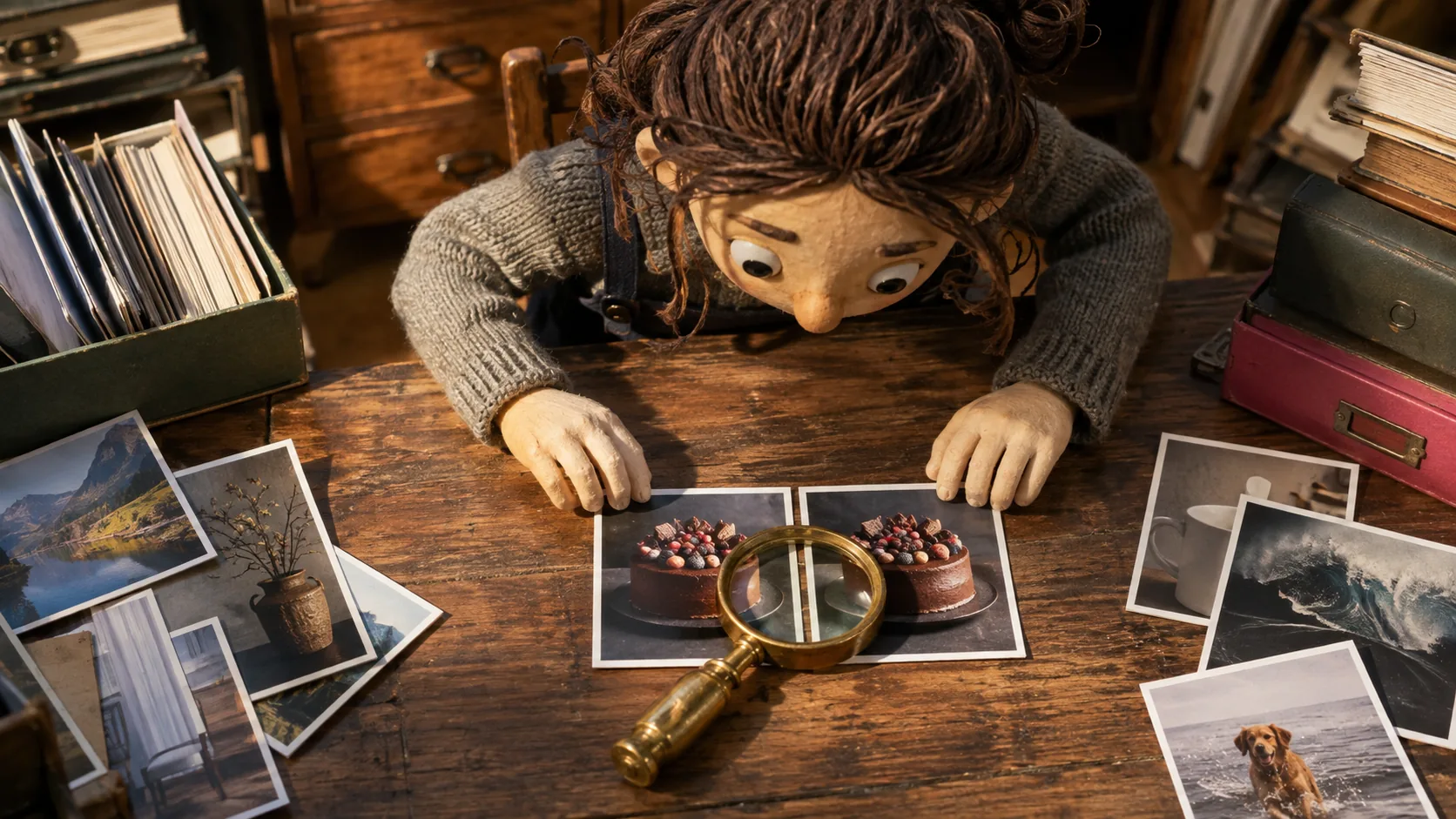
Imagine a home baker opening someone else’s page just before publishing her new menu. There is a photo that looks like her own shot of a cake. The comment box is already open. “You stole all my content” is waiting in the draft. Leave that sentence unsent for now. Save the page address and identify the image you want to compare.
Build the preparation around a request someone can check: which material you mean, what basis you have for contacting them, and what you want changed. Match each assertion in the draft to the relevant material. That gives “all my content” a specific subject. The practical goal is a draft for review or a clearly identified unresolved question. It does not establish infringement or predict what the request will achieve.
Save the page address, screenshots with the surrounding context, and the capture date. Add your source file or an earlier publication and mark the specific overlap. For a description, place the relevant wording side by side. Then check who created the material, what agreements exist with contractors, and what permissions were granted. If something remains unresolved, clarify it with the relevant person before asserting unverified rights.
The World Intellectual Property Organization (WIPO) explains that a timestamp can establish the state of digital content at a particular moment. Use that distinction when recording what you found and when you captured it. The statement does not make an ordinary screenshot proof of authorship or infringement. Nor does it guarantee that evidence will be accepted in a particular country or that a platform will remove the material.
For descriptions, another distinction matters. In its explanation of U.S. law, the U.S. Copyright Office says copyright protects expression; ideas, procedures, methods, systems, processes, concepts, principles, and discoveries themselves are outside that protection. In your comparison, identify the actual wording your request concerns. This explanation does not determine whether a particular description or photo is protected or whether infringement occurred. It also does not replace checking Ukrainian rules.
1. What exactly do you want changed?
If you want a particular photo removed, name that photo and make that request explicit. Then select the route: an available platform form whose requirements you have read, or the page owner’s published contact. Adapt the draft accordingly. Include the affected address, the specific overlap, a link to your reference material, your reviewed basis, and the requested change. Before sending, check each assertion and remove unnecessary personal data.
Hypothetical worked example
Before: Hypothetical setup: the baker has the source file of her photograph and sees the corresponding image on the other page. She has not checked permissions or saved the address. Her draft says, “You stole all my content.”
Decision: She saves the address, screenshots with context, and capture date, compares the photo with her source file, and reviews agreements and permissions. To continue the scenario, explicitly assume that no permission question remains unresolved and that she has found the page owner’s published contact. She limits her request to the compared photo so that each assertion matches the material she collected.
After: Hypothetical state after preparation: there is a folder of comparison material and a draft: “The page at [address] displays [specific photo]. My reference material: [link]. Basis for my request: [verified description]. Please remove this photo.” The draft has not been sent. The change is in the preparation; no response or outcome is assumed.
What is your next preparation step?
Choose your situation to see the next step.
Complete the comparison packet
Save the page address, screenshots with context, and capture date. Add your source material and mark the specific overlap. Then review the basis for your request.
Clarify your basis
Review who created the material and what agreements or permissions exist. Clarify open points with the relevant person. Until then, do not assert unverified rights.
Find a contact route
Check the platform help section for a relevant reporting route or the page for a published contact. If neither is available, record your search and retain the packet for later review.
Check the contact route
Open the intended form and read its requirements, or locate the page owner's published contact. Then select the route for your draft.
Prepare a draft for review
As a provisional next step, draft the affected address, specific overlap, your reference material, basis for the request, and requested change. Adapt it to the selected route. Review every assertion and remove unnecessary personal data. This selection establishes neither infringement nor entitlement nor success.
Choose your next preparation step. Read the conditions in order and use the first matching entry. After completing that action, review the conditions again.
- Your comparison packet is incomplete or unchecked: Save the page address, screenshots with context, and capture date. Add your source file or an earlier publication and mark the specific overlap.
- The packet is complete, but your basis is unclear or unchecked: Review authorship, agreements, and permissions granted. Clarify open questions with the relevant person before asserting unverified rights.
- The packet and basis are reviewed; you looked but found no suitable contact route: Check the platform help section and the page for a published contact. If the search remains unsuccessful, document it and retain the packet for later review.
- The packet and basis are reviewed; you have not checked the contact route: Open the intended form and read its requirements, or find the page owner’s published contact. Then select the route for your draft.
- Otherwise: provisionally prepare a draft for review. Include the affected address, specific overlap, your reference material, reviewed basis, and requested change. Adapt the draft to the selected route. Check each assertion and remove unnecessary personal data. This self-assessment establishes neither infringement nor entitlement nor success.
Return to the material now and save whatever is missing from the comparison packet. If the preparation is complete, review the draft assertion by assertion, then record your chosen contact route and the next point at which you will revisit the case. For future publications, keep source files, version history, and permissions together. You can include an authorship credit as part of the presentation, without treating it as a guarantee against copying.